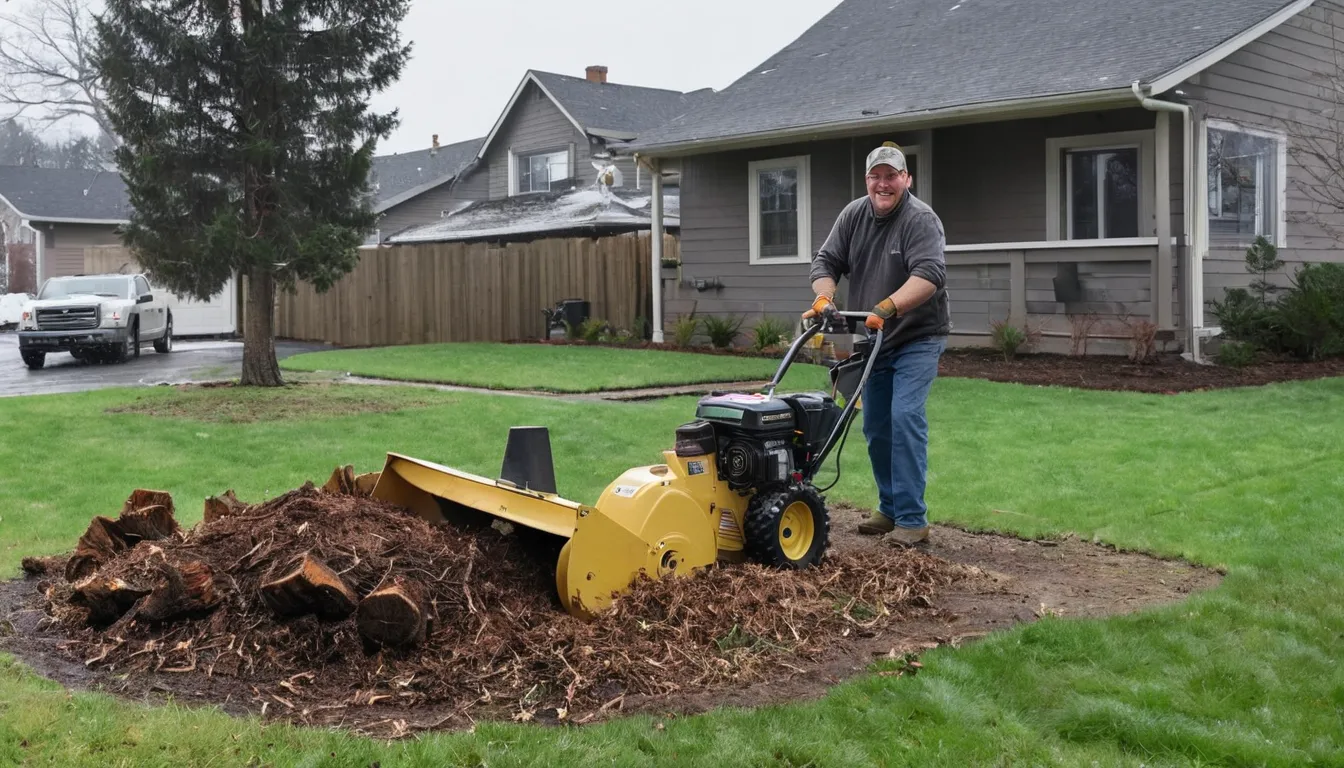
Need stump grinding in Pittsburgh?
Have a tree question? Send a request through the form or email contact@directorlab.garden. Share a few details, and a local provider in our network can follow up with next steps.
No obligationRequest an estimate for your stump
Is that stump really worth the trouble? For most yards, yes. A stump left behind after a tree comes down can trip people, snag mowers, and slowly rot into a home for ants and other pests. Stump grinding turns it into wood chips and clears the space for lawn, garden, or play.
Directorlab Tree Service is a referral service. We connect homeowners across the Pittsburgh area with independent providers who grind stumps. The provider does the work. We help you find one. You can request an estimate, ask your questions, and compare options with no obligation. This page explains how grinding works, what affects the price, and what to do afterward, so the spot stays tidy for years.
It looks harmless. It's just a round of wood sitting in the lawn. But a stump is a slow problem, and slow problems tend to get bigger.
If you have never dealt with one before, relax. Grinding is a routine job for providers in our network. This page walks you through it, one question at a time.
It can. Stumps hide in tall grass and catch toes. Kids, pets, and visitors are the usual victims. Mowers and string trimmers take a beating too.
Rotting wood is a buffet for carpenter ants, beetles, and termites. If your home is older, with a stone or block foundation, you want that activity far from the walls.
Often, yes. Many stumps send up shoots for years. Roots can also push at walkways, patios, and drain lines.
A provider brings a machine with a spinning wheel of hard steel teeth. They sweep it side to side across the stump. The wood turns to chips, usually several inches below the soil. What is left is a pile of mulch-like chips and a shallow hollow.
The grinder deals with the stump and the thick roots close to it. Deeper roots stay put and rot slowly over the years. That is normal. Ask how far out from the stump the provider plans to grind.
Grinding is quicker and tidier, and the machine often fits through a narrow gate. It suits most lawns and garden beds.
Full stump removal digs out the whole root ball. It makes sense if you plan to pour a slab or build over the spot. Tell the provider your plans before you decide. Ask first, cut second.
Four things matter most: the width of the stump, how hard the wood is, how many stumps you have, and how easily the machine can reach them. Roots above ground add time. So do rocks and old fence wire hiding in the soil.
Tight side yards, common around Cape Cod style and multi-family homes, may call for a smaller machine. Ask for a written quote and check what it covers. The table on this page shows typical ranges.
Not always. Frozen ground can hold a machine steady. But deep snow hides stumps and blocks access. Spring snowmelt turns lawns soft, and heavy equipment can leave ruts. Many providers wait for firm ground. Ask what timing suits your yard.
A little prep goes a long way:
Chips can fly, so parked cars and basement windows deserve a second look.
Want to know who is available near you? Request a callback to check provider availability.
Maybe the tree came down years ago. Maybe it was storm tree clearance after a coastal storm. Either way, an old stump is fair game. Aged wood can be dry and hard, or soft and half rotten. Tell the provider how long it has been there.
Still have a tree leaning, cracked, or lying on the ground? That is a different job, such as emergency tree removal or a tree falling service, and it needs its own request. Stumps come after.
You have choices. Spread them in a garden bed as mulch. Or ask the provider to haul them away. Keep piles off siding and away from the foundation, since damp chips hold moisture against the wall.
Think past the cut. Grinding ends the stump, but the yard still needs finishing.
Mix the chips with fresh topsoil and press it down. Top it off as it settles. Expect some sinking over a few months, especially after freeze-thaw cycles.
Grass seed takes well in spring or early fall. If you want a new tree, plant it well away from the house, pipes, and wires.
Snip any shoots as soon as you see them. Check the spot each spring.
Walk your yard each season. Look for dead limbs, cracks, and leaning trunks. Early pruning often prevents bigger problems later. Ready for next storm means looking up, not just down.
A provider grinds the stump below ground level, leaving chips and a smooth spot.
Thick surface roots near the stump can be ground too, so mowers and walkways stay clear.
Ask whether chips are left as mulch or hauled away, and whether topsoil is added.
Request an estimate and compare written quotes from providers before you pick a date for the work.
Prices vary by stump size, wood type, and access. These are typical U.S. ranges, not quotes. Ask for a written quote that lists exactly what the price covers before work starts.
| Item | Typical range | Notes |
|---|---|---|
| Small stump (under 12 in.) | $75 – $250 | Easy access keeps it near the low end of this range |
| Medium stump (12–24 in.) | $150 – $450 | Hardwoods take longer than softwoods |
| Large stump (over 24 in.) | $300 – $800 | Wide stumps and big flare roots add time |
| Extra roots or added depth | $50 – $300 | Needed if you plan to plant or build there |
| Chip haul-away | $50 – $200 | Optional if you want to keep chips as mulch |
| Full stump removal (dig-out) | $300 – $1,000 | For building projects; more labor than grinding |
Share how many stumps you have, their size, and how easy it is to reach the spot.
A local provider reviews your details and sends a written estimate for you to review.
Choose a time when the ground is firm and the path is clear.
Fill the hole, reseed, and watch for sprouts so the spot blends into your yard.
Compare providers and ask questions before anyone starts a machine, so the job matches your yard.
Independent providers in our network know local soil, weather, and yard layouts.
First-timers get simple explanations of depth, roots, chips, and what comes after the grind.
Request an estimate, compare it, and decide on your own schedule. There is no pressure.
Have a tree question? Send a request through the form or email contact@directorlab.garden. Share a few details, and a local provider in our network can follow up with next steps.
No obligationMost single stumps take under an hour, though large ones, hard wood, or tricky access can take longer. The provider can give a time estimate once they know the size, the type of wood, and where the stump sits.
Usually yes, once you fill the hollow with topsoil and let it settle. Many homeowners wait for firm, thawed ground and seed in spring or early fall. Ask the provider how much topsoil to add.
For lawns and garden beds, grinding is usually enough. Full removal makes more sense if you plan to pour concrete or build over the spot. Describe your plans so the provider can suggest the right option.
Have a tree question? Send a request through the form or email contact@directorlab.garden. Share a few details, and a local provider in our network can follow up with next steps.
No obligation